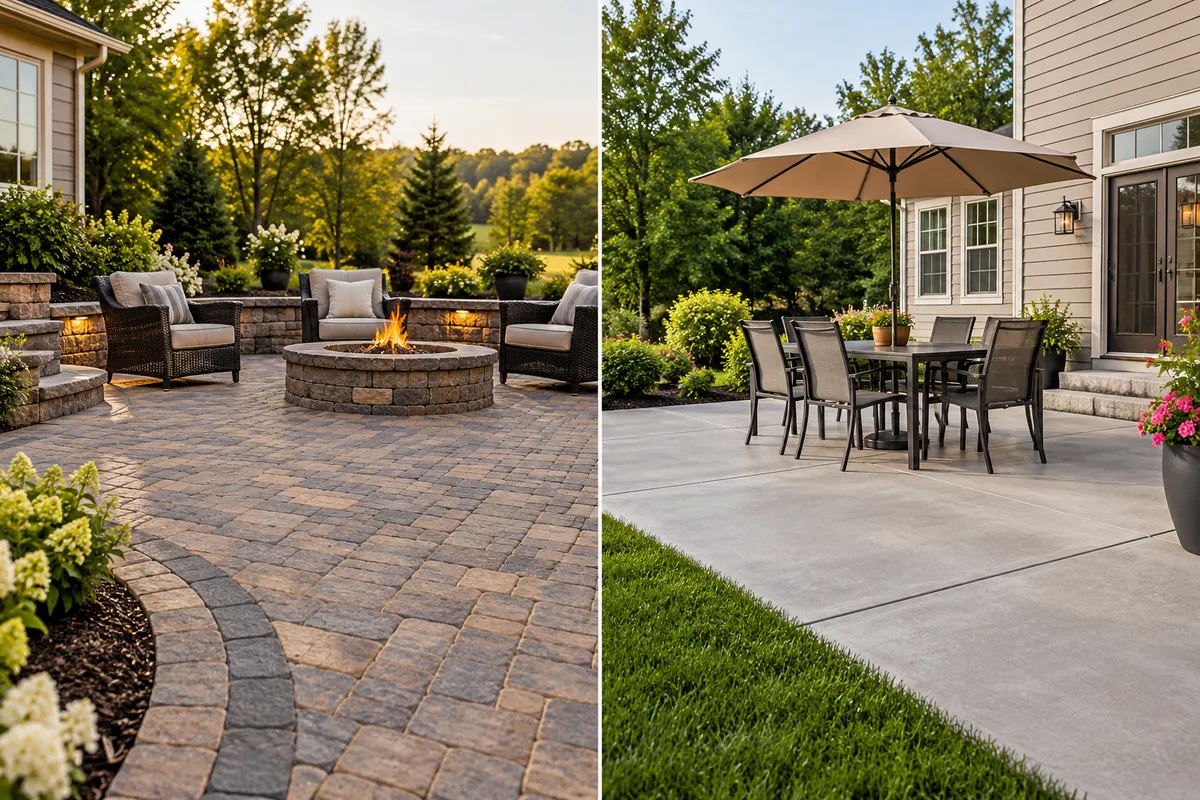
Paver Patio vs. Concrete Patio: Pros, Cons & Costs
Choosing the right patio material can make a significant difference in how you use and enjoy your backyard. Whether you want a comfortable space for family gatherings, an outdoor dining area, or a place to relax after a long day, your patio should complement your home and suit your lifestyle.
Two popular options are paver patios and concrete patios. Both can create a functional outdoor living area, but they differ in appearance, installation, maintenance, repair, and long-term value.
So, which is better for your home? The answer depends on your budget, design preferences, property conditions, and how you plan to use the space.
What Is a Paver Patio?
A paver patio is an outdoor surface made from individual units placed over a prepared base. These pavers are commonly made from concrete, natural stone, or brick and can be arranged in different patterns to create a customized appearance.
Because pavers are installed as individual pieces, homeowners have considerable flexibility when choosing colors, shapes, textures, and layouts.
Paver patios can work well for outdoor dining areas, entertainment spaces, garden seating, and backyard extensions. They can also be designed to connect with existing walkways, retaining walls, and other landscape features.
One of the main advantages of a paver patio is its repairability. If an individual paver becomes damaged or needs adjustment, it may be possible to remove and replace that section without rebuilding the entire surface.
Homeowners considering this option can explore Creative Designs Landscaping's paver patio and walkway services to learn more about incorporating pavers into an outdoor project.
What Is a Concrete Patio?
A concrete patio is created by pouring concrete into a prepared area and allowing it to harden into a continuous surface. It is a common choice for homeowners who want a straightforward, practical outdoor space.
Traditional concrete patios generally have a smooth or lightly textured finish. Depending on the design and installation method, concrete can also be colored, stamped, or finished to resemble materials such as stone or brick.
Concrete patios can be suitable for outdoor seating, dining areas, grilling spaces, and other everyday activities. Their simple appearance can complement a wide range of home styles.
One consideration is that concrete can develop cracks as a result of soil movement, temperature changes, moisture, or installation problems. Repairs may be noticeable, particularly when the existing concrete has weathered or the original finish is difficult to match.
The quality of the prepared base, drainage, concrete mix, reinforcement where appropriate, and control joints can all influence how well a concrete patio performs over time.
Paver Patio vs. Concrete Patio: Key Differences
Both options can provide a durable outdoor surface when properly designed and installed. However, they offer different advantages.
Feature | Paver Patio | Concrete Patio |
|---|---|---|
Appearance | Multiple patterns, colors, shapes, and textures | Simple finishes, with decorative options available |
Initial cost | Often higher due to individual units and installation labor | Often lower for a basic design |
Repair | Individual pavers can often be replaced | Repairs may require patching or replacing a larger section |
Cracking | Individual units can shift or crack | Continuous surfaces can develop visible cracks |
Maintenance | May require joint sand replenishment and weed control | May require cleaning, crack repairs, and periodic sealing |
Design flexibility | High flexibility in patterns and borders | Flexible finishes, but fewer construction patterns |
Installation | Requires careful base preparation and precise placement | Requires proper forming, pouring, finishing, and curing |
Drainage | Depends on the system; permeable pavers can help manage runoff | Usually requires grading and drainage planning |
Neither material is automatically the best choice for every property. The right option depends on your priorities and the conditions where the patio will be installed.
1. Which Patio Is More Affordable?
Budget is often one of the first considerations when planning an outdoor improvement project.
A basic concrete patio is generally less expensive to install than a comparable paver patio. Concrete can be particularly cost-effective for larger, straightforward areas with minimal decorative detailing.
Paver patios typically involve more installation labor because individual units must be placed and aligned over a properly prepared base. Material selection, intricate patterns, borders, and cutting requirements can also increase the overall cost.
However, the final price for either option depends on several factors:
Patio size and shape
Material quality and availability
Site preparation and excavation
Base materials and compaction
Drainage requirements
Access to the installation area
Steps, borders, or other design features
For example, a simple rectangular concrete patio may cost less than a patio built with premium pavers and a detailed pattern. On the other hand, decorative stamped concrete can cost more than a basic poured surface.
When comparing estimates, ask contractors to explain what is included in the price. A lower quote may not cover the same level of excavation, base preparation, drainage work, or finishing.
Which should you choose? If keeping initial costs down is your main priority, a basic concrete patio may be the better fit. If design flexibility and easier localized repairs are more important, pavers may justify the additional upfront investment.
2. Which Option Is More Durable?
Both pavers and concrete can last for many years when installed correctly and maintained as needed. Their durability depends on material quality, installation methods, ground conditions, and exposure to weather.
Paver patio durability
Individual pavers are designed to form a stable surface when installed over a suitable base. Their joints allow some flexibility, which can be helpful when minor ground movement occurs.
If part of the patio settles or an individual paver becomes damaged, a contractor may be able to lift the affected section, correct the underlying base, and reinstall the pavers.
However, pavers are not maintenance-free. Poor base preparation can cause uneven surfaces, while joint sand loss, weed growth, and shifting may require attention.
Concrete patio durability
Concrete provides a continuous surface that can perform well for everyday outdoor use. It is suitable for many residential patios and can require relatively little routine maintenance when properly installed.
Its main vulnerability is cracking. Concrete naturally changes with temperature and can be affected by soil movement, water infiltration, and freeze-thaw cycles.
Control joints help manage where cracks are more likely to occur, but they cannot guarantee that unwanted cracking will never happen.
Which should you choose? Both can be durable. Pavers may offer an advantage when localized repairs are a concern, while concrete can be a practical choice for homeowners who prefer a continuous surface and straightforward design.
3. Which Patio Offers More Design Options?
Your patio should look like a natural extension of your home rather than an isolated feature in the backyard.
Pavers provide extensive design flexibility. They are available in various colors, sizes, textures, and shapes, allowing homeowners to create traditional, contemporary, or natural-looking outdoor spaces.
Popular paver patio designs include:
Running bond patterns
Herringbone layouts
Basketweave patterns
Contrasting borders
Mixed-color designs
Stone-inspired finishes
You can also coordinate the patio with a walkway, retaining wall, or seat wall for a more consistent landscape design.
Concrete offers design options as well. A basic finish creates a clean, simple appearance, while stamped, stained, or colored concrete can provide more decorative appeal. The available finishes and their costs will depend on the installation method and contractor.
For homeowners planning a larger backyard renovation, it is worth considering how the patio will connect with the rest of the property. For example, combining a seating area with planting beds, walkways, and other features can create a more cohesive outdoor environment.
Learn more about how constructed features complement natural elements in our guide to hardscaping vs. landscaping.
Which should you choose? Pavers are a strong choice if you want distinctive patterns, detailed borders, or a customized design. Concrete may be preferable if you want a simpler appearance or a decorative finish without the layout of individual units.
4. How Much Maintenance Does Each Patio Need?
Every patio needs some maintenance to keep it clean, safe, and attractive. The type of work required differs between pavers and concrete.
Maintaining a paver patio
Routine maintenance may include sweeping debris, rinsing the surface, managing weeds, and replenishing joint sand when necessary.
Depending on the paver system and the conditions around the patio, occasional resetting may be needed if sections become uneven. Sealing is optional for many installations, although it can be useful for certain materials and finishes.
Maintaining a concrete patio
Concrete patios typically need regular sweeping and occasional washing. Depending on the surface and local conditions, periodic sealing may help protect the finish.
Cracks should be assessed and repaired when appropriate, particularly if they allow water to enter or create uneven surfaces. Some stains and repairs may remain visible even after maintenance.
Which should you choose? Concrete may appeal to homeowners who want simple routine maintenance. Pavers can require additional attention to joints, but individual sections may be easier to repair without disturbing the entire patio.
5. How Do Indiana's Weather Conditions Affect Your Choice?
For homeowners in Indiana, weather is an important part of patio planning. Seasonal temperature changes, rainfall, winter freezing, and spring thawing can affect outdoor surfaces.
Both pavers and concrete need proper site preparation and drainage to perform well under these conditions.
Pavers in changing weather
A properly constructed paver patio can accommodate some movement between individual units. If sections settle after seasonal changes, they may be adjusted by correcting the base and reinstalling the affected pavers.
The benefit depends on the quality of the original installation. Poor drainage or inadequate base preparation can still lead to shifting and uneven areas.
Concrete in changing weather
Concrete can withstand outdoor conditions when the mix, finishing, joints, and curing are appropriate for the environment. However, moisture entering the concrete can contribute to deterioration during freeze-thaw cycles, particularly when the concrete is not suitable for the conditions.
Proper drainage, appropriate concrete specifications, and correctly positioned control joints help reduce potential problems.
Before choosing either material, consider how water moves across your property and whether the installation area has soft soil, low spots, or existing drainage concerns.
Which should you choose? Both are viable options for Indiana homes. Installation quality, drainage, and site preparation are just as important as the material itself.
6. Which Patio Is Better for Drainage?
Drainage deserves attention before any patio is installed. Water should not collect against the house, pool on the patio, or flow into areas where it could cause erosion or other problems.
Traditional paver patios are not automatically permeable. Most conventional paver systems use joints that do not allow the same level of water infiltration as specially designed permeable paving systems.
Permeable pavers, when installed with the appropriate open-graded base and drainage design, can allow water to pass through the surface and into the underlying system. Their suitability depends on the soil, groundwater conditions, available space, and local requirements.
Concrete patios generally direct water across the surface. Proper grading and drainage planning are essential to prevent standing water and direct runoff away from the home.
Which should you choose? If stormwater management is a major concern, ask a contractor whether a permeable paver system is appropriate for your property. If you choose concrete, ensure that the design includes adequate slope and a suitable drainage plan.
7. Can You Repair a Paver Patio or Concrete Patio Easily?
Repairs are worth considering before installation because outdoor surfaces are exposed to weather, ground movement, and everyday use.
One advantage of pavers is that individual units can often be removed and replaced. If an underground utility needs attention or a section settles, the affected area may be lifted and reinstalled after the underlying issue is corrected.
Concrete repairs can be more challenging to blend into the existing surface. Depending on the damage, repairs may involve filling cracks, patching, resurfacing, or replacing a section of concrete. Differences in color and texture can remain visible.
Neither option is completely repair-free. The right solution depends on the type of damage and its underlying cause.
Which should you choose? Pavers are often the more convenient option when localized repairs or future access to underground utilities are important considerations.
8. Which Patio Is Better for Your Backyard?
The best choice depends on how you intend to use the space.
A concrete patio may work well if you want a simple area for outdoor furniture, a grill, or everyday family activities. It can also be suitable for larger spaces where a straightforward layout is preferred.
A paver patio may be a better fit if you want a decorative focal point, a customized seating area, or a design that coordinates with walkways and other hardscape features.
For example, a homeowner who frequently entertains guests may prefer a paver patio with a contrasting border and a walkway connecting the patio to the driveway. Someone looking for a practical outdoor surface with a modest initial budget may prefer basic concrete.
Think about your furniture, traffic patterns, access points, and the relationship between the patio and the house before making a decision.
For more ideas about coordinating outdoor features, explore Creative Designs Landscaping's hardscaping services.
How to Choose the Right Patio for Your Home
Before requesting an estimate, consider these questions:
What is your budget? Compare the complete installed cost rather than material prices alone.
How important is appearance? Decide whether you prefer the flexibility of individual pavers or the more continuous look of concrete.
How much maintenance are you comfortable with? Consider joint maintenance, sealing, cleaning, and potential repairs.
What are the site conditions? Soil stability, slope, drainage, and access can influence the best installation method.
Will you add other outdoor features later? If you are planning walkways, retaining walls, or planting beds, consider how the patio will fit into the broader design.
Getting a professional assessment can help you compare suitable options and avoid problems caused by inadequate preparation or drainage.
Final Verdict: Paver Patio or Concrete Patio?
There is no single winner for every property. Paver patios offer greater flexibility in patterns, localized repair options, and the opportunity to create a customized outdoor design. Concrete patios are often more economical for basic installations and provide a continuous surface with relatively straightforward routine maintenance.
Your decision should come down to the appearance you want, your budget, site conditions, and long-term maintenance preferences.
If you are planning a new patio or updating an existing outdoor area, Creative Designs Landscaping can help you explore options that suit your property and intended use. The company offers landscaping and hardscaping services in its service area, including paver patios and walkways.
Visit the Creative Designs Landscaping to learn more about the company, or explore its paver patio and walkway services when planning your next outdoor project.
Frequently Asked Questions
1. Is a paver patio better than a concrete patio?
A paver patio may be better for homeowners who prioritize design flexibility and easier localized repairs. A concrete patio may be preferable for those seeking a simpler design and potentially lower initial installation costs. Both can be durable when installed correctly.
2. Is a paver patio more expensive than concrete?
Paver patios often have a higher initial installation cost because they require individual units and more placement labor. However, actual costs depend on the materials, patio size, site preparation, design complexity, and local labor rates.
3. Which patio lasts longer, pavers or concrete?
Both can last for many years with proper installation and maintenance. Pavers can be easier to repair in sections, while concrete may develop visible cracks over time. Neither material has a guaranteed lifespan because conditions and installation quality vary.
4. Do paver patios require a lot of maintenance?
Paver patios generally require sweeping, occasional cleaning, weed control, and joint sand maintenance when necessary. Some installations may benefit from sealing, depending on the materials and desired finish.
5. Do concrete patios crack in winter?
Concrete can crack due to temperature changes, moisture, soil movement, and other factors. Freeze-thaw conditions can contribute to deterioration when moisture enters the concrete. Proper installation, drainage, and control joints help manage these risks.
6. Are paver patios suitable for Indiana weather?
Yes, paver patios can work well in Indiana when the materials, base, drainage, and installation methods are suitable for local conditions. Seasonal temperature changes and moisture make proper preparation particularly important.
7. Can pavers be installed over an existing concrete patio?
In some situations, pavers can be installed over existing concrete, but it is not suitable for every patio. The existing surface must be structurally sound, drainage and finished heights must be considered, and the proposed installation system must be appropriate. A professional assessment can determine whether this approach makes sense.
8. Which patio is easier to repair?
Paver patios are often easier to repair in localized areas because individual units can be removed and replaced. Concrete repairs may require patching or replacing a larger section, and the repaired area may not match the surrounding surface exactly.
9. Should I choose a paver patio or concrete patio for a small backyard?
Either option can work well in a small backyard. Pavers provide opportunities for decorative patterns and defined borders, while concrete can create a clean, simple surface. The layout, drainage, access, and intended use should guide your choice.
10. How do I get started with a patio installation project?
Start by deciding how you want to use your outdoor space and establishing a budget. Then assess the site's slope, drainage, access, and existing landscape features. A landscaping contractor can help you compare materials and plan an installation that fits your property.