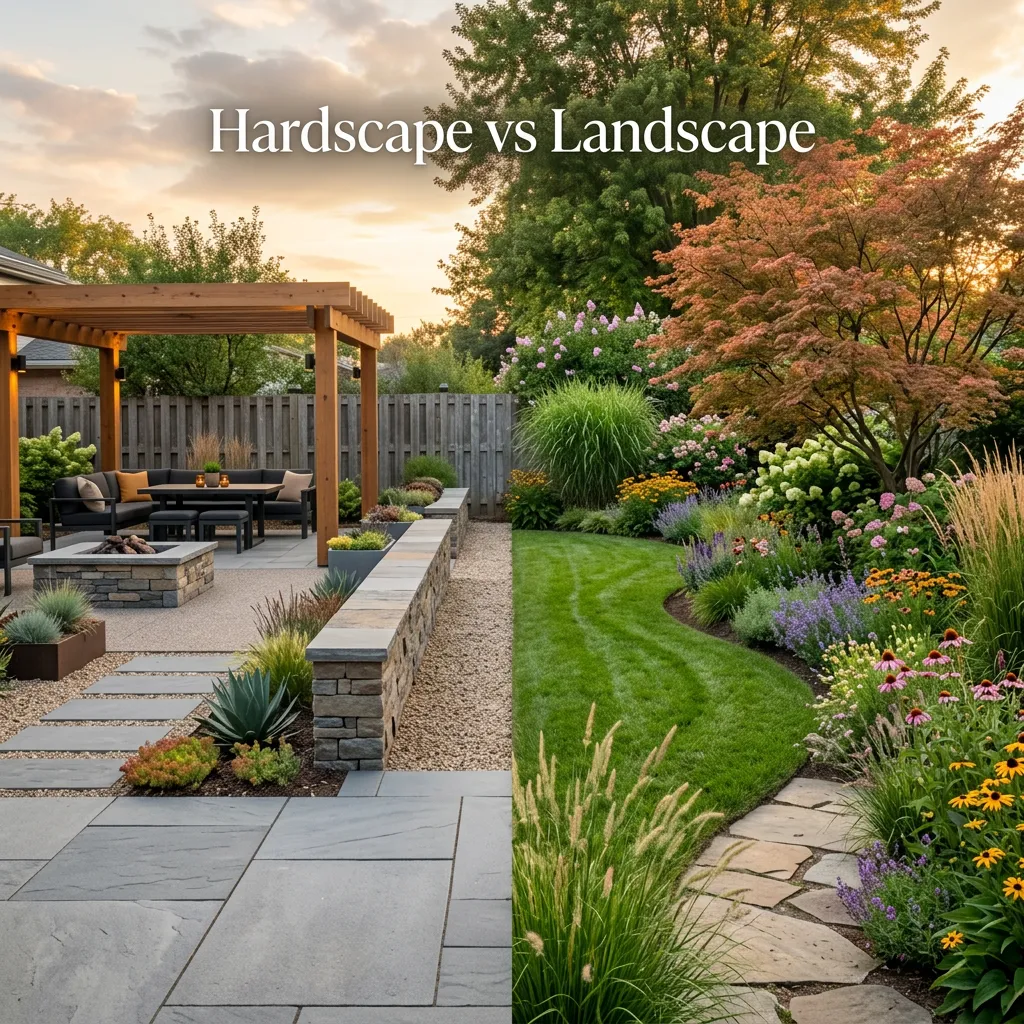
Hardscaping vs. Landscaping: What's the Difference?
When planning an outdoor improvement project, you may hear the terms landscaping and hardscaping used interchangeably. While they are closely related, they refer to different parts of your outdoor space.
Landscaping generally focuses on living and natural elements such as grass, plants, shrubs, trees, mulch, and garden areas. Hardscaping focuses on the constructed elements of a landscape, including patios, walkways, retaining walls, seat walls, and other permanent features.
Understanding the difference can make it easier to decide what your property needs. In many cases, the best outdoor spaces combine both landscaping and hardscaping to create an area that looks attractive while also being practical for everyday use.
What Is Landscaping?
Landscaping involves designing, installing, and maintaining the natural elements around your home. It can range from simple lawn improvements to a complete redesign of your front or backyard.
Common landscaping elements include:
Lawn and grass areas
Trees and shrubs
Flower beds
Mulch
Planting areas
Garden spaces
Seasonal cleanup
Lawn maintenance
Landscape design
A well-planned landscape does more than add color to your yard. Plant placement, lawn areas, garden beds, and other natural features can improve the overall appearance of your property while creating a more enjoyable outdoor environment.
For homeowners looking for help with the natural elements of their property, Creative Designs Landscaping provides landscaping services designed around the property's layout, the homeowner's preferences, and the intended use of the outdoor space. You can learn more about the company's landscaping services.
What Is Hardscaping?
Hardscaping refers to the non-living, built elements of an outdoor space. These features are typically constructed using materials such as concrete, natural stone, brick, pavers, or other landscape construction materials.
Common examples of hardscaping include:
Paver patios
Walkways
Retaining walls
Seat walls
Outdoor living areas
Fire pits
Stone features
Other structural landscape elements
Hardscaping can give your yard structure and create defined areas for activities such as dining, entertaining, walking, or relaxing.
For example, a paver patio can create a dedicated outdoor seating area, while a retaining wall can help manage changes in elevation and create more usable space.
Creative Designs Landscaping offers hardscaping services in Indiana, including patios, walkways, retaining walls, and other hardscape projects. The company's current service page also highlights proper base preparation, drainage, and material selection as important parts of a durable hardscape installation.
Hardscaping vs. Landscaping: The Key Differences
The easiest way to understand the difference is to look at what each one contributes to your property.
Landscaping | Hardscaping |
|---|---|
Focuses on natural and living elements | Focuses on constructed elements |
Plants, grass, trees, and shrubs | Patios, walkways, and walls |
Changes as plants grow | Generally provides a permanent structure |
Adds greenery and natural character | Adds structure and usable areas |
Often requires ongoing maintenance | Typically requires less routine maintenance |
Neither approach is necessarily better than the other. They serve different purposes and often work best together.
Why Combine Landscaping and Hardscaping?
A yard with only plants and lawn can look attractive, but it may not provide enough defined space for entertaining or outdoor activities. Similarly, a yard made up almost entirely of hardscape can feel overly structured without enough greenery and natural elements.
Combining the two creates balance.
For example, imagine a backyard with a paver patio surrounded by planting beds, shrubs, and a maintained lawn. The patio provides a functional space for furniture and entertaining, while the landscaping softens the edges and adds color and natural texture.
This type of combination can also help connect different areas of your property.
A walkway can lead from the driveway to a patio. Landscaping can frame the walkway. A retaining wall can define a planting bed or help organize a sloped section of the yard.
The result is a more cohesive outdoor space rather than a collection of separate features.
When Should You Consider Landscaping?
Landscaping may be the right starting point if your main concerns are the appearance, maintenance, or overall layout of your yard.
You may benefit from professional landscaping if:
Your yard lacks definition or structure
You want to improve curb appeal
Your planting areas need to be redesigned
Your lawn needs regular maintenance
You want to add shrubs, plants, or garden areas
You are planning a larger outdoor transformation
A professional can help determine how different plants, lawn areas, beds, and other natural features can work together with your existing property.
When Should You Consider Hardscaping?
Hardscaping may make more sense when you want to add usable or structural features to your property.
Consider hardscaping if you want to:
Build a new patio
Add a walkway
Create an outdoor entertaining area
Improve a sloped part of the yard
Add a retaining wall
Create additional seating areas
Define different areas of your backyard
For example, if your backyard currently consists mostly of grass but you want an area where your family can sit and entertain guests, a paver patio could provide a practical foundation for that space.
You can explore Creative Designs Landscaping's paver patio and walkway services to see how hardscape features can become part of a larger outdoor design.
How Do You Know Which One Your Property Needs?
The answer depends on what you want to accomplish.
If your main goal is to improve greenery, planting, lawn appearance, or garden areas, landscaping may be the primary focus.
If you want to create a patio, walkway, retaining wall, or other constructed feature, hardscaping may be more appropriate.
For larger projects, there is often no need to choose only one.
A landscape professional can look at the property's existing layout and help determine how natural and constructed elements can work together.
What About Retaining Walls?
Retaining walls are a good example of how landscaping and hardscaping can overlap.
A retaining wall is a constructed feature, so it falls under hardscaping. However, it can also support the overall landscape design by creating defined planting areas, managing changes in elevation, or helping make a sloped yard more usable.
Creative Designs Landscaping specifically provides retaining wall services, with the current service page focusing on using retaining walls to address erosion and make better use of backyard space.
The right design depends on the property's slope, drainage, soil conditions, intended use, and overall landscape plan.
How to Plan a Landscaping and Hardscaping Project
Before starting an outdoor project, think about how you actually want to use the space.
Ask yourself:
How do I want to use my backyard?
If you want to entertain guests, a patio or outdoor living area may be important.
Does the property have slopes or drainage concerns?
These conditions may affect the design and may make features such as retaining walls important.
How much maintenance do I want?
Some homeowners prefer larger lawn areas, while others prefer defined beds, hardscape features, or lower-maintenance areas.
What should the finished space look like?
Consider how the patio, lawn, plants, walkways, walls, and other features will look together rather than designing each element independently.
A well-planned project should consider the entire property rather than treating each feature as a separate installation.
Why Professional Planning Matters
Landscaping and hardscaping are more connected than they may initially appear. The location of a patio can affect planting areas. A retaining wall can change the usable space in a yard. A walkway needs to work with the property's overall layout. Drainage also needs to be considered when installing certain hardscape features.
That is why planning is important before construction begins.
Creative Designs Landscaping is a local, family-operated business serving the area with landscaping, hardscaping, patio design, retaining walls, seat walls, and lawn services. The company identifies itself as an Amish-owned business and emphasizes craftsmanship and attention to detail.
If you're considering a larger outdoor project, you can also learn more about Creative Designs Landscaping and the approach behind its landscaping and hardscaping services.
Hardscaping and Landscaping Can Work Together
The difference between landscaping and hardscaping is straightforward: landscaping focuses primarily on natural and living elements, while hardscaping focuses on constructed features.
But the most successful outdoor spaces often use both.
A lawn can provide an open area for everyday use. Planting beds can add greenery and seasonal interest. A paver patio can create a place to gather. A walkway can connect different areas of the property. A retaining wall can help define or improve a challenging section of the yard.
Together, these elements can create an outdoor space that is attractive, functional, and suited to the way you use your home.
If you're planning an outdoor improvement project and aren't sure where to begin, a professional landscaping consultation can help you determine which combination of landscaping and hardscaping features makes sense for your property.
Frequently Asked Questions
What is the main difference between landscaping and hardscaping?
Landscaping focuses mainly on natural and living elements such as grass, plants, trees, shrubs, and garden beds. Hardscaping involves constructed features such as patios, walkways, retaining walls, and other permanent landscape structures.
Is a patio considered landscaping or hardscaping?
A patio is generally considered hardscaping because it is a constructed outdoor feature. Pavers, concrete, natural stone, and similar materials are commonly used to build patios.
Can landscaping and hardscaping be done together?
Yes. Combining the two can create a more balanced outdoor space. For example, a paver patio can be surrounded by planting beds, shrubs, and lawn areas to combine functional hardscape with natural landscaping.
Is a retaining wall hardscaping?
Yes. Retaining walls are generally considered hardscaping because they are constructed landscape features. They can also play an important role in the overall landscape design of a property.
Which is more expensive, landscaping or hardscaping?
The cost depends on the size, materials, design, site conditions, and scope of the project. Hardscaping projects can involve significant material and construction costs, while landscaping costs vary depending on plant selection, lawn work, installation, and maintenance requirements.
Do I need a professional for landscaping and hardscaping?
It depends on the project. Small planting or maintenance tasks may be manageable for homeowners, while projects involving patios, retaining walls, grading, drainage, or significant landscape changes can benefit from professional planning and installation.
How do I start a landscaping or hardscaping project?
Start by identifying how you want to use the space, what problems you want to solve, and which features you would like to add. A professional landscaping company can then assess the property and help develop an appropriate plan.
Plan Your Outdoor Space With Creative Designs Landscaping
Landscaping and hardscaping each serve a different purpose, but they can work together to create a more useful and attractive property. Whether you are considering new planting areas, a paver patio, a walkway, or a retaining wall, the right combination depends on your property and how you want to use your outdoor space.
Creative Designs Landscaping provides landscaping and hardscaping services in the local area, along with paver patios and walkways, retaining walls, seat walls, and lawn services.
If you're ready to discuss your outdoor project, request a free quote from Creative Designs Landscaping.